Ships Happen 001

Donna.

A trenching machine, a fishing net left overnight, and a $7 million recovery operation that came within meters of becoming something far worse.

Location
Levantine Basin
Asset
Subsea pipeline
Direct cost
~$7M USD
Threat type
Fishing gear
The scene

A routine return
to a known KP.

A vessel — call her Donna the Dregger — was trenching a subsea pipeline in the Levantine Basin, close to a major port. The first pass at the section went exactly to plan.
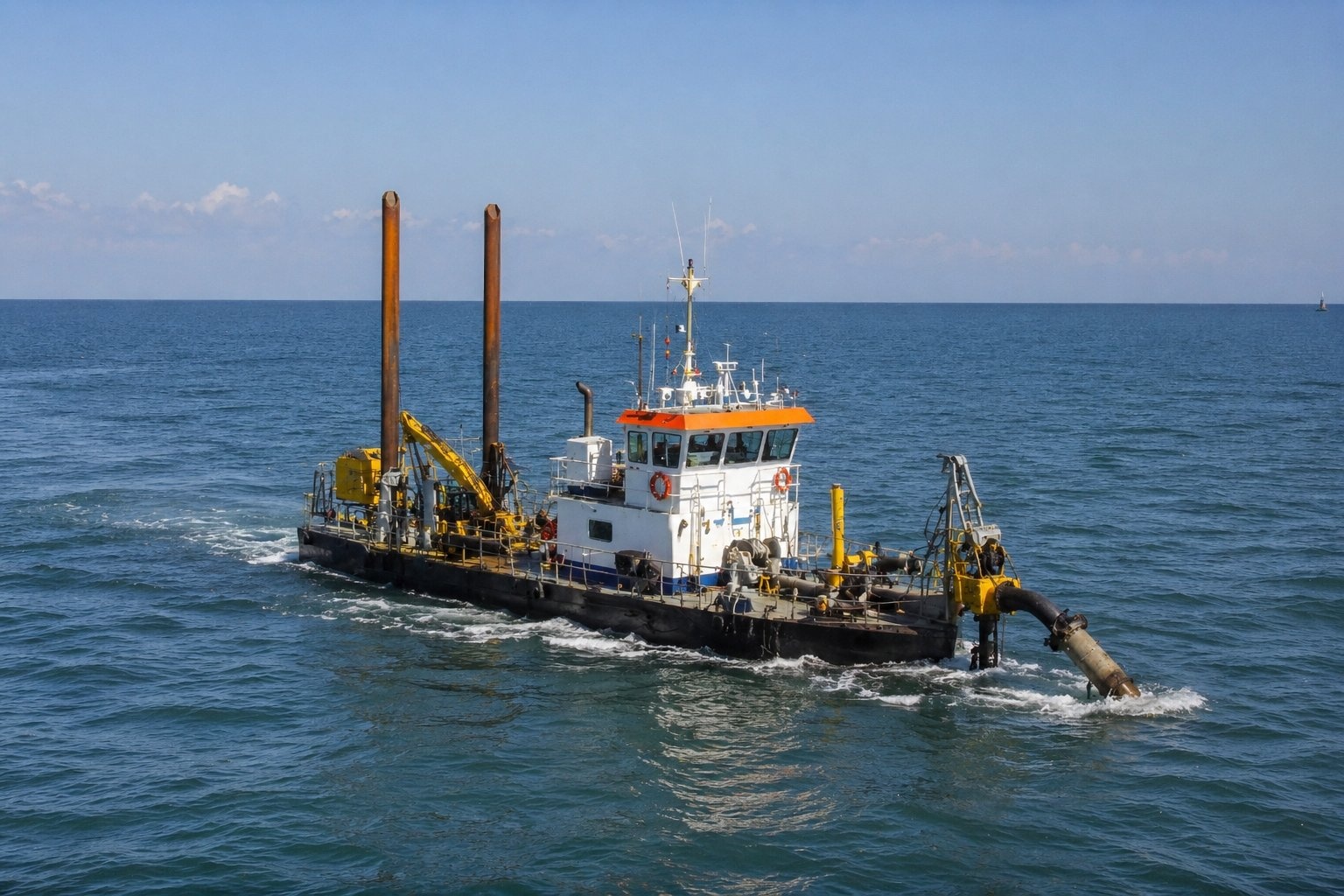
A trenching support vessel similar to Donna the Dregger, working at sea with stinger arm deployed off the stern.
A trenching support vessel of the class involved — stinger arm visible to the right, deployed for subsea operations.

Twenty-four hours later, Donna returned to the same KP to continue the trench. Within minutes of dropping the trenching machine to the seabed, the operator saw it: high tension on the stinger. The machine was stuck.

Timeline.

T+0h
First trenching pass on the target KP completes without incident.
T+24h
Donna returns to the same KP. Trenching machine is redeployed.
T+24h
+15min
High tension on the stinger. Machine is stuck. Operations halted.
T+24h
+hours
Divers deployed for subsea inspection. They find the entire trenching machine wrapped in a fishing net left during the 24-hour window.
T+days
A complex recovery operation is required. Risks include diver safety, mechanical overload on the pipeline, and damage to the trenching equipment itself.
After
Recovery and re-launch completed successfully. Direct damages estimated at ~$7 million USD.

What could have
gone much worse.

The recovery worked. But the threat envelope was wider than the trenching equipment alone. Several adjacent failure paths were live throughout the operation:

01
Net into the vessel's thrusters. If the fishing net had migrated into Donna's own propulsion during recovery, the vessel loses control — escalating a contained incident into a drift scenario directly above an active pipeline.
02
Mechanical overload on the pipeline. A botched recovery could have transferred excessive tension through the stinger into the pipe itself.
03
Adjacent tanker traffic. Two mono-buoys for tanker offload sit in close proximity. A tanker inbound to dock could pick up the same net in its propellers, lose control, drift toward shore or the breakwater, and drop emergency anchor — directly onto subsea assets.
The takeaway

A small fishing boat can't damage a pipeline by dragging gear over it. A net left overnight can stop a multi-million-dollar maintenance operation cold — and put assets, divers, and adjacent traffic at risk.

Why this case
matters for SEARA-SIPS.

Fishing activity is routinely dismissed as low-threat to pipelines. This case shows the second-order risk: not the boat, but what the boat leaves behind.

Continuous monitoring of fishing vessel activity — at all sizes, including the small boats most platforms ignore — is part of the same protection envelope as anchor-strike and dredging detection. Multi-sensor fusion of AIS, satellite imagery, and operational corridor data flags overnight gear deposits before the next maintenance op rolls into them.

The recovery was clean this time. Next time, the variables are different.

More from the series.

All cases →
002
Ships Happen 002

Storm Anchors.

Read case →
003
Ships Happen 003

Never Too Deep.

Coming soon
Get notified

Catch the next case
before it ships.

Request a demo and we'll send each Ships Happen case study as it goes live — full timelines, data extracts, and the operational lessons.